What is lipid? Lipid: The saturated or unsaturated compounds consisting of carbon, hydrogen and oxygen which are insoluble in water but soluble in ether, benzin chloroform etc. are…
What is Bacteria? The simplest microscopic one-celled chlorophyllous organism which has the underdeveloped nucleus and lacking nucleolus and nuclear membrane is called Bacteria. They are the prokaryotic type…
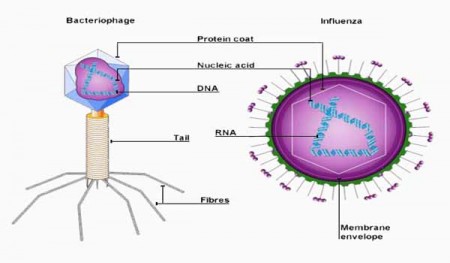
Structure of virus in biology Structure of virus The virus has two parts- 1. Nucleic Acid 2. Capsid or Protein Coat 1. Nucleic Acid: * Both DNA and RNA…
Definition of Virus in Botany Definition: The word virus comes from Latin. It means poison. In the old days, anything that used to cause disease was called a virus. The…
How does water move up the vascular system? Water moves into the xylem vessels inside vascular system in the centre of the root; it gets into by using bordered pits. The xylem is…
How temperature affect on enzyme catalysed reaction? Temperature reaching the enzyme and substrate molecules causes them to raise random movement. The larger temperature the extra the molecules move and so the more repeatedly they collide.…
How useful are proteins? Proteins can be just as useful as carbohydrates and lipids in releasing energy. Broken down into their element amino acids, they release energy during respiration. The list…
How much energy do you need in your diet? One’s body requires a certain amount of energy every day to keep your metabolism ticking over, which means that your organs function correctly and the…